Bordeaux Multi-Stop Days: Hourly Chauffeur Scope
Understand the difference between a fixed transfer and an hourly chauffeur request in Bordeaux, then describe the stops, waiting and return plan clearly.

A Bordeaux itinerary may involve a hotel departure, an appointment, a tasting, lunch and an evening return. The important booking question is not simply where the car goes. It is whether the request concerns a point-to-point transfer or a chauffeur who remains assigned as the schedule develops.
The distinction affects how you describe the journey, the waiting periods and the vehicle requirements. It also helps France Limousine Services confirm whether the requested scope matches the hourly service presented on its Bordeaux page.
Match the format to the way the day will unfold
A point-to-point transfer is defined around a pickup and a destination. Once the passenger reaches that destination, the requested journey is complete. If this is the format you need, state it clearly and ask for confirmation because the Bordeaux reference page specifically presents hourly and full-day chauffeur arrangements rather than describing a separate transfer offer.
An hourly or as-directed request has a different purpose. The chauffeur and vehicle remain assigned while the itinerary moves between planned stops or changes within the agreed scope. The Bordeaux hourly chauffeur service page confirms this format for hotel movements, wine estate appointments, restaurants, private tastings, meetings, shopping and flexible stops.
The page also describes keeping the same vehicle assigned for itineraries involving Saint-Emilion, Medoc or Graves, together with hotel timing and an evening return. This makes the hourly format relevant when waiting between appointments is part of the transport plan rather than an incidental pause at the destination.
| Booking question | Point-to-point request | Hourly or as-directed request |
|---|---|---|
| Main scope | A defined pickup and destination | A sequence of stops within an agreed schedule |
| Between appointments | No continuing assignment is implied | The chauffeur remains assigned during planned waiting |
| Best information to provide | Pickup, destination and journey context | Stops, appointments, waiting, return plan and flexibility needed |
| What requires confirmation | Whether the requested transfer is offered | Whether the full itinerary fits the hourly service scope |
Transport format should not be confused with regulatory status. The French government provides an overview of the rules governing taxis, private-hire vehicles and other forms of private passenger transport, as well as separate information about access to the passenger transport profession. These references explain the wider framework; the commercial scope of a particular journey still needs to be confirmed with the operator.
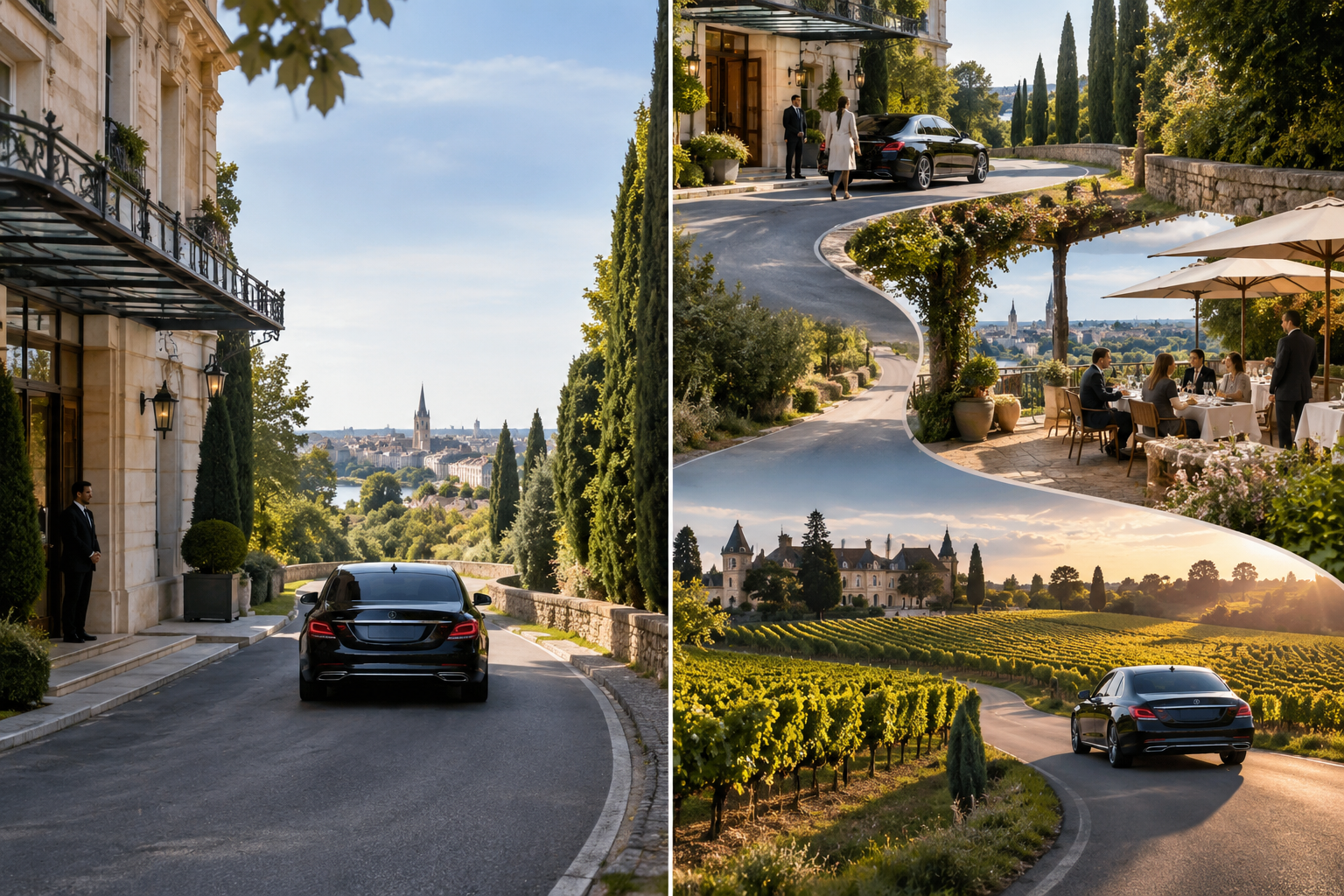
Illustration comparing a completed transfer with an ongoing multi-stop chauffeur assignment.
Define what must remain assigned between stops
For an hourly chauffeur request, list the places that shape the day rather than providing only the opening pickup. A hotel, wine estate, restaurant, business district or tasting appointment can each affect where the chauffeur is expected to wait and when the vehicle must be ready for the next movement.
Waiting should be described as part of the itinerary. Distinguish an appointment during which the chauffeur is expected to remain assigned from a stop that ends the requested service. If the return to a Bordeaux hotel is part of the same arrangement, include it in the scope instead of leaving it implicit.
The same principle applies when the order of stops may change. “Flexible stops” is more useful when accompanied by context: identify the fixed appointments, the stops that may move and the place where the assignment is intended to finish. This does not require predicting every detail. It gives the service provider enough information to confirm what the as-directed portion of the request means.
Passenger and luggage notes also belong in the initial scope. The reference page lists Mercedes E-Class, Mercedes S-Class, Mercedes-Maybach S-Class, Range Rover, Mercedes EQV, Rolls-Royce Cullinan and VIP Sprinter among the vehicles presented for hourly and full-day service. It does not provide capacity details in the supplied information, so the appropriate model and luggage fit should be confirmed rather than inferred from a vehicle name.

Illustration of the details used to define an hourly chauffeur request.
Turn the itinerary into a confirmable request
A clear request connects the movements into a single transport plan. Begin with the pickup context, then name the appointments and flexible stops, explain where waiting is required, add passenger and luggage information, and identify the intended final drop-off. Mention any vehicle preference, but treat suitability as a point for confirmation.
Avoid using “hourly” as the only description. The term identifies the booking format, not the full operational scope. A request becomes clearer when it explains whether the chauffeur should stay assigned during lunch, a tasting, a meeting or another appointment, and whether the schedule includes a return to Bordeaux.
The same discipline helps if the journey crosses several locations. The complementary guide to defining a France chauffeur booking scope explains how to separate confirmed stops, flexible movements and details that still need approval. For Bordeaux, the target page remains the reference for the services and vehicles actually presented.
The next choice is therefore concrete: decide whether you need a completed transfer or an ongoing chauffeur assignment, then submit the stops, waiting expectations, luggage notes and return plan for confirmation through the Bordeaux hourly chauffeur service page.